Imagine being a graduate in Chemistry in the late 1970s, and opting to pursue a career in design? Risky? Perhaps, but Pinakin Patel’s decision started a journey that has deeply impacted the way contemporary design evolved in India. Takht sofa Calling it a turning point in his life, Patel reasons the move, saying, “I had not found my ‘swadharma’ [duty to self]. Only when a person finds that is the path aligned for a successful future.” Aptly titled, The Turning Point — the ongoing retrospective at Nilaya Anthology — offers a holistic view of this journey through the lens of his designs. Bramhaputra dining table The seeds were sown growing up in the lanes of erstwhile South Bombay. The displays by street vendors, hawkers, and shops taught him the innate nature of aesthetics ‘against all odds of climate, money, legality’, he says. The Turning Point is the first-of-its-kind deep dive into the architect-designer’s life works. The retrospective features 11 works of furniture that capture Patel’s distinct creative signature; ‘a cultural restatement’, as he puts it. Contour sofa Like his approach, it also offers a holistic view of design and art. A total of 19 decorative artworks and objects from the designer’s personal collection, to be auctioned by Pundole’s, will also be on display. The Ramp at Anthology will also showcase a curated selection of works by the designer’s mentor, Padma Shri Awardee, the late Professor Dashrath Patel. These will be paired with a short film that poetically interprets Pinakin Patel’s ideas of essentialism. Burl chair “Across 50 years of his practice, there is an absolute richness of cultural context and understanding that reveals itself across various materials, disciplines and stories,” shares curator Pavithra Rajaram, creative director, Nilaya Anthology. Deco chairs Now, based in Alibaug, amidst his sustainable, green practice, Patel’s return is a reminder of the vibrant and desi innovation in a city consumed by its own modernity. A close-up of Baroque dining table TILL March 31; 11 am to 7.30 pmAT Nilaya Anthology, Peninsula Corporate Park, Lower Parel West
05 February,2026 10:08 AM IST | Mumbai | Shriram IyengarThursdayBold flavours Catch this Chinese New Year festive menu, themed around the Year of the Flaming Horse. Savour dishes from Jackfruit and Cheese Golden Blossom to the Golden Stallion dessert.TIME 12 pm to 4 pm; 7 pm to 12 amAT Hakkasan, Bandra West. CALL 8355877777 COST Rs 5000 (for two) FridayRaw reality on stage A moment from a previous rendition of the play. Pic courtesy/@curtainhazeproduction Catch a seat at this new age play, The Guardian Angel, incorporating audio-visual elements, and movement choreography to illustrate a complex tale of mental health struggles.Time 6.30 pm and 9 pmAt Rangshila Theatre, Aram Nagar Part 1, Andheri West. Log on To altshows.comENTRY Rs 350 SaturdayTales of resilience A still from the film. Pic courtesy/PSBT India on YouTube Dive into the on-ground realities of the Agaria community, traditional salt farmers from western India, with a film screening of The Wounded Souls of the Rann and a conversation with director, Dinesh Lakhanpal. TIME 4 pm to 6 pmAT Dr Bhau Daji Lad Museum, Rani Baug, Byculla East. LOG ON TO urbanaut.appENTRY Rs 118 onwards Tracing the city Children during a similar session at the venue; (right) an illustration from the book. Pics courtesy/Shivam Choudhary, Kahani Tree Let your children learn about the journey of the City of Dreams, from a cluster of seven islands into a cosmopolitan city, through author Veena Rao’s book, Bombay Is Mumbai, followed by a drawing session.TIME 11 am to 12 pmAT Kahani Tree, Industry Manor, Prabhadevi. REGISTER events@kahanitree.com ENTRY Rs 500 SundayEye on Japan A Sayonara dance performance. Pic courtesy/Fujiwara Japanese Consultant If you’re a fan of all things Japanese, check out the Banzai Japan Event 2026, featuring cultural performances, a tea ceremony, traditional calligraphy, and a wellness programme.TIME 11 am to 2.30 pmAT The Oriental Club, Girgaon Chowpatty.CALL 7666152391 (to register, by February 6) ENTRY Rs 800 (per person; with lunch) Soulful Sufi notes Salman Ali on stage. Pic courtesy/@officialsalman.ali Don’t miss the grand finale of Sama’a: Festival of Sufi Music, with musician Salman Ali’s Sufi compositions.TIME 6.30 pmAT National Centre for the Performing Arts, Nariman Point. LOG ON TO in.bookmyshow.com ENTRY Rs 500 onwards
05 February,2026 10:06 AM IST | Mumbai | Trisha GhoshThe Dalai Lama’s new album called Meditations: The Reflections of His Holiness the Dalai Lama won the award for the Best Audio Book, Narration, and Storytelling Recording at the recent Grammy Awards in Los Angeles. It is a 10-part lesson in living a peaceful and nourishing life. The words are spoken by the Dalai Lama with soothing music provided by artistes such as the sarod maestro Amjad Ali Khan and his sons, Ayaan Ali Bangash and Amaan Ali Bangash. At a time when conflict is a common language of expression, the 90-year-old’s gentle speech arrives as an antithesis. It values compassion and warm-heartedness. In one of the tracks titled Harmony, he insists that there’s too much emphasis on “My country, their country”. The Dalai Lama urges us to “completely forget past histories” and “think of new realities.” One of the most tender pieces of wisdom is offered in the track titled Mind. He reveals the Tibetan Buddhist principle of preserving peace of mind. There are methods to control destructive emotions, he believes. Recalling the words of an ancient Tibetan master, the Dalai Lama acknowledges that one’s enemy is their best teacher as enemies enable us to practise patience. He also talks about his meetings with scientists, and how their discussions have led them to reflect on a compassionate way of life. Rightly then, the Grammy win is a recognition of ‘our shared responsibility’, as the Dalai Lama mentioned in his speech; it is an urgent and clear reminder to live in harmony and practise unconditional love and care. Log on to: Spotify, Apple Music
05 February,2026 10:03 AM IST | Mumbai | Nandini VarmaUp until now, CoastalTrace, created by Rian Kothari, a 17-year-old Breach Candy resident, has functioned as a public reporting platform aimed at addressing gaps in how coastal and marine pollution is documented and flagged in Mumbai. It began as a city-specific initiative in Breach Candy, and in the past month, has expanded beyond Mumbai, with its reach extending to Chennai, Goa and Kerala. Drawn to nature, animals and marine life from an early age, Kothari took up scuba diving a few years ago in the Maldives. After returning to India, what stood out to him was not just the marine life around water bodies in South Mumbai, but how little of it was visible in Indian waters. Across large stretches of the coastline, particularly around Mumbai — poor water quality and heavy pollution meant visibility was extremely low, even in areas known to support marine ecosystems. The interface was built by Kothari over six to eight months using basic JavaScript skills, online coding forums and selective use of artificial intelligence tools. It positions CoastalTrace as a middleman, trying to make pollution more visible. It took Kothari seven to eight months to develop the platform, given extensive research for it. (Left) Rian Kothari holds a Sea Urchin at Zanzibar Islands in 2023; Kothari on a scuba dive at Maldives in 2024 To further refine it, he carried out background research on the nature of coastal pollution, studied publicly available material on conservation and on how pollution is classified and recorded, and analysed existing documentation to shape the reporting options. He also took help from his academic coursework in environmental science in school to populate the platform’s structure and review on-ground mitigation efforts to align it with practical data-sharing needs. Rian and his mother, Shital Kothari (left) bottle up food wrappers under an initiative of Mission Green Mumbai. Pics Courtesy/Rian Kothari This experience prompted him to closely examine polluted waters. He began researching major pollution hotspots in the city, including sewage-heavy zones such as Sassoon Dock, urban water bodies like Powai Lake, and the stretch where the Mithi River runs alongside Bandra Kurla Complex. Track your waste The platform is deliberately simple. It allows citizens to log pollution incidents by selecting a location, identifying the type of waste and adding brief descriptive details. Categories available on the interface include plastic waste, mixed marine debris, hazardous or large waste, general household trash and others. These reports are then automatically routed to relevant NGOs, research institutions or government bodies based on location and type of pollution. In Mumbai, reports are shared with organisations including Maharashtra Pollution Control Board, Maharashtra Maritime Board and the Afroz Shah Foundation. Similar routing systems now operate in Chennai, linking with the Tamil Nadu Pollution Control Board, Bay of Life Foundation and ExNoRa International; in Goa, with the Goa State Pollution Control Board, Act for Goa and Coastal Impact India; and in Kerala, with the Kerala State Pollution Control Board, the Kerala Coastal Zone Management Authority and the Centre for Marine Living Resources and Ecology (CMLRE) in Kochi. This connects data to groups ranging from student-led sea turtle conservation networks, to state coastal zone authorities. An image of a dashboard on the website displaying sewage-intense zones using colour codes The platform also overlays weather and tidal data, helping identify pollution patterns and high-activity zones over time. Older reports are automatically archived to avoid clutter, ensuring that recent data remains current and usable for organisations responding on the ground. Kothari hopes CoastalTrace will evolve beyond a reporting tool into a stronger data and research resource. While he has not received formal feedback from organisations yet, a conversation with officials working in a plastic recycling organisation, influenced a key shift in approach. “At first I wanted the platform to help NGOs organise clean-ups and push government action, but I realised that in Maharashtra, most clean-ups are handled through government contracts, making it less ideal,” reiterates Kothari. As a result, CoastalTrace for now, focuses on documenting pollution and keeping it publicly visible. He hopes it can expand to more coastal cities, adding short risk briefs to explain vulnerability and exposure, and closer collaborations with official stakeholders as data can be used for analysis by journalists, city planners and local authorities. Log on to: coastaltrace.org We tested it Using CoastalTrace was largely seamless. As a first-time user, this writer could log a pollution sighting quickly by selecting the location, choosing the type of waste and adding a short note. The map view makes the information easy to understand, showing how individual reports connect to a wider pattern especially around areas which are closer to the beaches, for example, a section of the city’s west coast, alongside Mahim to Prabhadevi. However, a few improvements could make the experience stronger. The waste categories could use detailed examples, or tips to help users classify debris accurately. There is also limited clarity on what happens after a report is submitted, which may leave users unsure about the impact of their contribution. Overall, CoastalTrace works well as a public documentation tool, and with small refinements, it could become more effective and user-friendly.
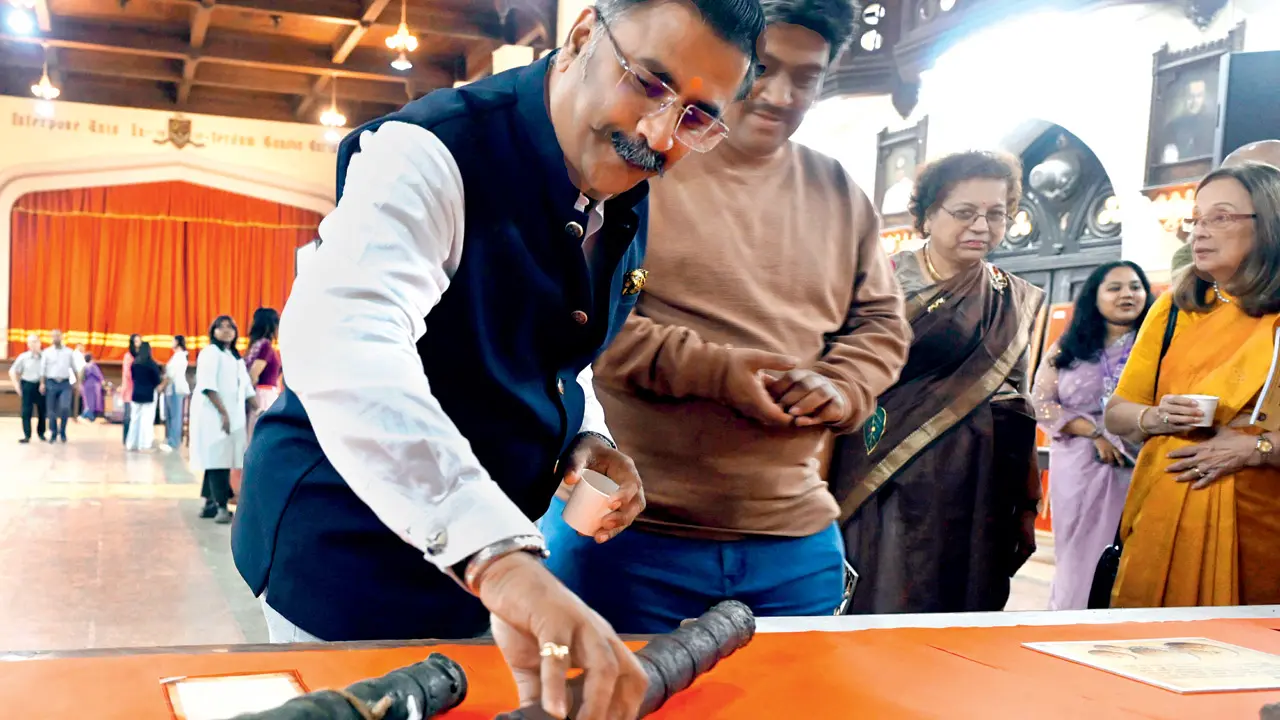
05 February,2026 09:57 AM IST | Mumbai | Rumani GabhareIt’s not every day that you interact with the descendant of an admiral whose heroics graced the pages of your History textbook in school. Last weekend, Raghujiraje Angre, ninth generation descendant of visionary Maratha admiral Kanhoji Angre, was in the city to inaugurate Shastrāstra, an exhibition on the history of war through weapons and sculptures dating to 15th and 16th Century India. It was organised by the Department of Ancient Indian History, Culture and Archaeology of St Xavier’s College (Autonomous), with The Museum Society of Mumbai and CSMVS. In between marvelling at these historic exhibits and patiently answering queries from visitors, he spoke about the Angre legacy. Excerpts from the interview. Tell us about your family’s connection with Maratha naval military warfare.My family has always been connected with the manufacture of arms and ammunition. Back in the 16th and 17th centuries, my forefathers, Kanhoji Angre and his children were focused on shipbuilding and Maratha warfare tactics. There was overt dependence on the Portuguese, and later, the British (East India Company) for metal. Kanhoji built his own foundry, and he envisioned designs for cannons that are still seen in our Maratha forts. Dr Pheroza Godrej, chairperson, Museum Society of Mumbai looks at the cannon ball displays The Angres concentrated on metal and Indian weaponry, and created indigenous versions and adapted them to suit local requirements, including factoring the build of Indians rather than accepting foreign weaponry templates. ...And Kanhoji Angre had the vision to do this back in the 1600s?Yes. A lot of people worked in the Angre foundries, and plenty of research went into developing this indigenous weaponry. Local knowledge also helped. The British and Portuguese were blue water navies whereas the Maratha navy was a brown water navy. They understood the terrain very well. Those who were employed by Kanhoji Angre and the Marathas were familiar with the terrain, and thus their knowledge superseded that of their rivals during battles along Maharashtra’s coast. Raghujiraje Angre inaugurates the exhibition. Also seen in the frame are Dr Anita Rane Kothare and Dr Pheroza Godrej. PICS/ASHISH RAJE How important is it to document warfare?It is of utmost importance. In Europe, maritime legacy is well preserved. Unfortunately, it’s not too visible here. Look at the irony… just across the road from here, near Sardar Griha building a cannon is covered under a shanty. I discussed this with the Archaeological Survey of India (ASI). I hope necessary measures will be taken to remedy it. It’s part of our naval treasures, and historic documentation, and must be preserved. I am hopeful that change will emerge. An exciting development is the upcoming National Maritime Heritage Museum in Lothal, Gujarat, which is the Prime Minister’s dream project. It’s shaping up well into one of the world’s largest maritime museums. I am involved with setting up the Maratha gallery section. What are your plans to showcase Alibaug’s maritime roots?Work is in the pipeline; I’m keeping my fingers crossed. The Chief Minister of Maharashtra, Devendra Fadnavis has given the go-ahead for these plans, which includes a gallery. We must try to preserve our heritage and also instill awareness. With the Trans-Harbour Link and the Rewas-Karanja Bridge, Alibaug will transform rapidly. So, when tourists come here it shouldn’t be to just chill or savour our seafood, but to also experience our culture. We are keen to change that narrative. School children attend the exhibition at St Xavier’s College What is being done to protect the Angre legacy?We have preserved arms and ammunition, as well as weapons from that era. There is also the Kanhoji Angre Samadhi campus that we recently restored with support from the state archaeological department. Plans are afloat for a show at the site. What are some of the valuable lessons that Kanhoji instilled in maritime warfare?Let’s look at it the other way. When we refer to India’s borders, we immediately think of Wagah or Attari. But we also have coastal borders, and Mumbai is located along this border. Our nation has 7500-plus kilometres of coastline. So, when attacks emerge from the sea, Mumbai is under direct threat. The sea is a vulnerable natural factor. It isn’t just the duty of the Navy or Coast Guard; commoners too need to be vigilant. Kanhoji Angre We conduct awareness drives among coastal communities in the area. For example, if an unidentified person is spotted, or if suspicious activity is noticed, it is reported back. The same practice was followed 300 years ago in Kanhoji’s time. Until any ship or vessel docks at the port, it doesn’t mean that it has reached its destination. At the port itself, strict checks are needed to prevent invasion. Kanhoji followed this practice. It’s why the Konkan has the highest density of sea forts as compared to any other part of India’s coastline. There are sea forts at an average of every 15 kms. Such was his vision. Did you know? Blue water navy: When a country is able to protect naval power away from its own country, at a global levelBrown water navy: When a country guards its waters near its territorial borders, within its inland waterways
04 February,2026 09:37 AM IST | Mumbai | Fiona FernandezFor decades, access to the Bombay Natural History Society library was largely limited to members, scientists, students and researchers. This week, that changes. As part of Open Library Week, the organisation is opening its shelves to the public, allowing anyone to explore a collection that spans wildlife, ecology, botany, environmental science and other related subjects. World of books The subject-wise sections reflect the range of BNHS’s collections — mangroves, trees, fungi, zoology, bees, butterflies, fishes, vertebrates, reptiles, marine biology and more. During this Open Library Week anyone can browse and engage with the material. The Journal of the Bombay Natural History Society (BNHS), which started in 1883, is still in circulation today and is displayed alongside its latest editions. A highlight for visitors is the centenary edition of the Hornbill Journal (BNHS). Dated photographs of Dr Salim Ali receiving the Padma Vibhushan (left) and with his camera, on display at the Open Library Week at BNHS. Pics courtesy/BNHS collection For Gouri Uchgaonkar, head librarian of BNHS, the intent is simple: “We wanted people to access the number of books solely dedicated to natural history and to make them aware of the depth of knowledge housed within an organisation that has shaped conservation discourse in India for over a century.” Dr Salim Ali’s archive A dedicated corner in the library honours Dr Salim Ali, one of the most celebrated ornithologists, whose personal collection — letters, photographs and documents — was donated entirely to BNHS. The organisation is currently digitising this archive using in-house scanners and archival software, ensuring long-term preservation. (From left) The centenary edition of the Hornbill Journal along with the other journals Also check out the hand-painted lithographs from early BNHS journals, glass photographic plates, and a collection of 16 mm wildlife films shot by renowned conservationist EP Gee, many of which are being digitised into MP4 formats and will be made available to members soon. An archaic door in the library houses some of its most valuable holdings: a hand-coloured lithograph of ornithologist John Gould’s Birds of Asia, with all seven volumes and 35 parts, the Gazetteer of Bombay City and Island from 1909, and several other illustrated works on Indian ornithology from the mid-1800s. Assistant librarian Ankush Pimpalkar says, “We preserve these with utmost care as several of these volumes have undergone extensive restoration through grants from the National Archives of India, involving months-long chemical conservation processes,” followed by a smirk from Uchgaonkar reiterating that this is the only room in the library that has air conditioning for the books. A photograph of a vintage film that belonged to EP Gee Kishor Rithe, director, BNHS, summed up this week’s overarching aim: “We want people to come to BNHS and build the much-needed habit of reading and exploring natural history with the amount of books we have available for the visitors.” Our favourite finds >> Hornbill Journal published by the Bombay Natural History Society (BNHS) >> Bird Families of the World, illustrated by AD Cameron with CJO Harrison as consultant editor >> The Fall of the Sparrow by Salim Ali >> The Wildlife of India by EP Gee>> The Elephant in Early Indian Art: From the Indus Valley to AD 650 by Kamal Shankar Srivastava TILL February 6AT The Bombay Natural History Society, Hornbill House, Shaheed Bhagat Singh Road, opposite Lion Gate, Fort. TIME 9.30 pm to 5.30 pm
04 February,2026 09:31 AM IST | Mumbai | Rumani GabhareGloves Pic Courtesy/royalenfield Get a gripMumbai’s roads can leave you with callouses, in addition to working your nerves. You cannot go wrong with this professional collection from Royal Enfield as they offer a diverse selection for both off road riders, and the regular commuter.LOG ON TO royalenfield.comCost Rs 1840 onwards Face Masks Sport desi Pic Courtesy/tvami The Mumbai local is no less fashion-competitive than the runway at Paris. These handmade, reusable face masks of double-layered cotton come with catchy Bandhani designs that are perfect for a girl on the go.LOG ON TO tvami.comCOST Rs 485 Pastel on the go Pic Courtesy/vrittidesigns There are some designs that stay in vogue. If your fashion quotient is subtle, desi, but colourful, try these hypoallergenic, hand painted face masks that are double-layered as well and stay battle-ready for the great city commute.LOG ON TO vrittidesigns.comCOST Rs 390 Scarves and Bandans Safe on the road Pic Courtesy/blingqueen You can never go wrong with a touch of whimsy. This Chennai-based apparel studio offers a collection of UV-protected, breathable neck gaiters that are a comic book fan favourite.LOG ON TO blingqueen.inCOST Rs 799 onwards Print it right Pics Courtesy/crystalhealshop Speaking of retro, try these boho chic bandanas with tribal prints to make your next bike ride more aesthetic. Light, breathable, and stylish, they are also versatile to suit every fashion choice.LOG ON TO crystalhealshop.comCOST Rs 390 onwards Retro chic Pic Courtesy/itokri Remember those cute scarves and stoles that made grandma look like a babushka? It’s time to give it a more modern spin. Try these pure cotton bandanas imbued with Bagru block prints by traditional artisans to pair with your work or party outfit.LOG ON TO itokri.comCOST Rs 450 onwards Eyewear Styled in Goa Pic Courtesy/cocoleni This Goa-based design platform handcrafts frames that are durable, stylish, and framed for Indian weather. If you are looking for something to stand out from the crowd, give them a go.LOG ON TO cocoleni.comCOST Rs 6890 onwards Speed fashion Pic Courtesy/eyewearlabs This one has already caught the eye of rough riders across the country, and is worth including in your riding gear for its benefits of protection from UV and dust.LOG ON TO eyewearlabs.comCOST Rs 1999 onwards Stylist speaks What started in COVID-19 as a precautionary measure has now become a daily and necessary requirement. So, it is natural that masks, bandanas and scarves have become a part of daily fashion. If you are looking to style it up, here are my tips. >> Choose breathable, organic fabric like cotton, linen, and hemp that is functional and fashionable.>> Pair suitable eyewear with a headscarf and cap.>> Avoid synthetic and clingy material for masks. Polyester can be difficult to breathe through over longer hours.>> Be experimental with colours. Lighter pressed colours are a suitable choice. But the key is to choose the right material. Information courtesy: Nisha Sainani, designer, Waikiki_India
03 February,2026 09:26 AM IST | Mumbai | Shriram IyengarEver wondered what life in space actually feels like, where gravity disappears and everything floats? In this episode of Figuring Out, host Raj Shamani speaks with retired United States Navy captain and former NASA astronaut Sunita Williams, who was recently in India as a keynote speaker at the Kerala Literature Festival. Williams offers a clear, unsensational account of everyday life aboard the International Space Station (ISS) and much more. Life inside ISS Shamani frames the conversation around her routine, asking Williams how it feels to eat, live, and manage daily chores in space. She describes the International Space Station (ISS) as a deeply human environment. Even in orbit, she notes with humour, “Everybody farts — though efficient ventilation ensures smells do not linger, but we’re all people at the end of the day. The space station smells like us.” What initially feels mechanical and unfamiliar gradually becomes lived-in and comforting, shaped by human presence. Raj Shamani in conversation with former NASA astronaut Sunita Williams. Pic courtesy/Youtube Williams also speaks in detail about sound, an aspect of space rarely discussed. “Something people might not be used to is the constant noise in space.” The ISS creaks as temperatures change and machines run continuously. Over time, however, these sounds fade into routine. Rather than being unsettling, she explains, they create a sense of normalcy, reinforcing the feeling of daily life continuing in orbit. A perspective from space Comparing life in space and on Earth, Williams is direct. “If going to space is demanding, returning is even harder.” She describes intense nausea, disorientation, and weakness as gravity reasserts itself. In orbit, the neurovestibular system largely stops working and when you come back on Earth, gravity overwhelms the body. After splashdown, in the Gulf of Mexico off the coast of Tallahassee in Florida on March 18, 2025, she recalls “bobbing in the ocean, like a cork.” Recovery typically takes about a month, with trainers helping astronauts relearn balance, coordination, and strength. A view of India from the ISS Shamani asks her the quintessential about how India looks from space. Williams replies India can appear hazy during the day, but at night it is spectacular. Even the Himalayas stand out sharply, marking the collision of the tectonic plates, she elaborates. Reflecting on her journey, she concludes, “People are fundamentally good, and deeply connected — a truth that becomes clearer only when viewed from space.” Log on to: Raj Shamani on YouTube
03 February,2026 09:21 AM IST | Mumbai | Rumani GabhareSince the Internet can’t get enough of throwbacks this month, here’s one that hits close to home: On Ganesh Chaturthi in 2015 in the heart of Girgaon, Nucleya aka Udyan Sagar hopped on a travelling truck fitted with speakers to launch his album Bass Rani. From what we remember, a few thousand people danced shoulder to shoulder that night. A moment from the 2015 album launch of Bass Rani on the streets of Girgaon More than a decade later, backstage at SulaFest 2026 in Nashik, we meet 46-year-old Nucleya in a strikingly subdued avatar. The salt-and-pepper beard gives it away. There’s a twinkle in his eye though when we bring up his Mumbai escapade. While the artiste’s electric set right after our chat taught us not to judge a musician by his greys, here’s what the bass heavyweight had to say backstage. Excerpts from an interview. Your new album stands out right off the bat from the title: Diggi Bumba. Tell us the story behind it...It started with a track I composed inspired by ’90s Bollywood music. I took it to Anu Malik, to see if he would like to feature on the title track. He seemed to love the nostalgic vibe, and his first reaction was “Diggi bumba!” A dated photograph of Nucleya at the launch. PICS COURTESY/NUCLEYA ON YOUTUBE The new album sounds familiar and fresh at the same time. What’s new, and what has remained the same since the first day?I am glad people are still hearing the old Nucleya in the album. My creativity is still intact, but the sound has evolved. Earlier, my music was way heavier. I’ll admit I wasn’t great at composition. I’ve spent more time honing that skill in the new album. Diggi Bumba also features new talent from across India. What was your scouting process like?It’s all Instagram. I might have DMed [messaged] nearly 200 musicians who piqued my interest. From the ones who got back to me, I’m sitting on a bank of nearly 50 collaborations. We have two new albums coming up. The first one is a Marathi album that will feature artistes like Dorwin and Shreyas Sagvekar. It’s too soon to talk about the second one, but it should be out by the end of the year. In a 2016 interview, you shared that you have music playing in the background at home 24x7. Has it shaped your son Guri’s affinity to music?Absolutely. Guri is 14 now and he has grown up to become a singer/pianist/beatboxer/producer. He’s being trained by a Japanese beatboxer, and trying to get into competitive circles. At the moment, he’s fascinated by 3D printing and cooking on the side. I never asked him to take up music, and we’re letting him explore his avenues, just as a teen should. Talking of 2016, how do you remember the Ganpati Visarjan concert in Mumbai?It was all a dream. That day was special because everyone who was around me was as invested in making it special, including the fans who showed up in large numbers. I am a big believer in manifestation. Though I’m not sure if Mumbai can still pull off something like that; we can always manifest it. In fact, everything that you hear on the new album is something I had already pictured in my head when I set out to make it. Artistes across the board seem to be slowing down, retiring, and taking time for themselves in 2026. You took an extended hiatus before it was considered normal. How important was that?I took a year and a half off from music because I wasn’t enjoying what I was doing. I spent time with my family, went for runs, and read books. My screen time dwindled to an all-time low. I found human psychology to be fascinating, so I started reconnecting with friends and like-minded people to understand and discuss how they navigate phases like this. It helped me plan my way forward. Gigs to catch Sounds like Stockholm Tune into Swedish progressive house music at DJ Jeremy Olander’s (above) extended set in Lower Parel. ON February 6; 8 pm AT antiSocial, Lower Parel. LOG ON TO @antisocialofflineENTRY Rs 799 Spin it in Spanish Dance along to Barcelona-based DJ Edgar De Ramon’s minimal techno-inspired tunes. ON February 7; 9 pmAT Waves, Bayview Lawns, Mazgaon. LOG ON TO sortmyscene.comENTRY Rs 999 On my bookshelf In keeping with his interest in psychology, the musician recommends the bibliography of his current favourite author and Nobel prize winning physicist, Richard Feynman.AVAILABLE Leading bookstores and e-stores Next in line Nucleya’s next album will spotlight the Marathi language, and feature artistes like Dorwin and Shreyas Sagvekar (of Tambdi Chamdi fame)
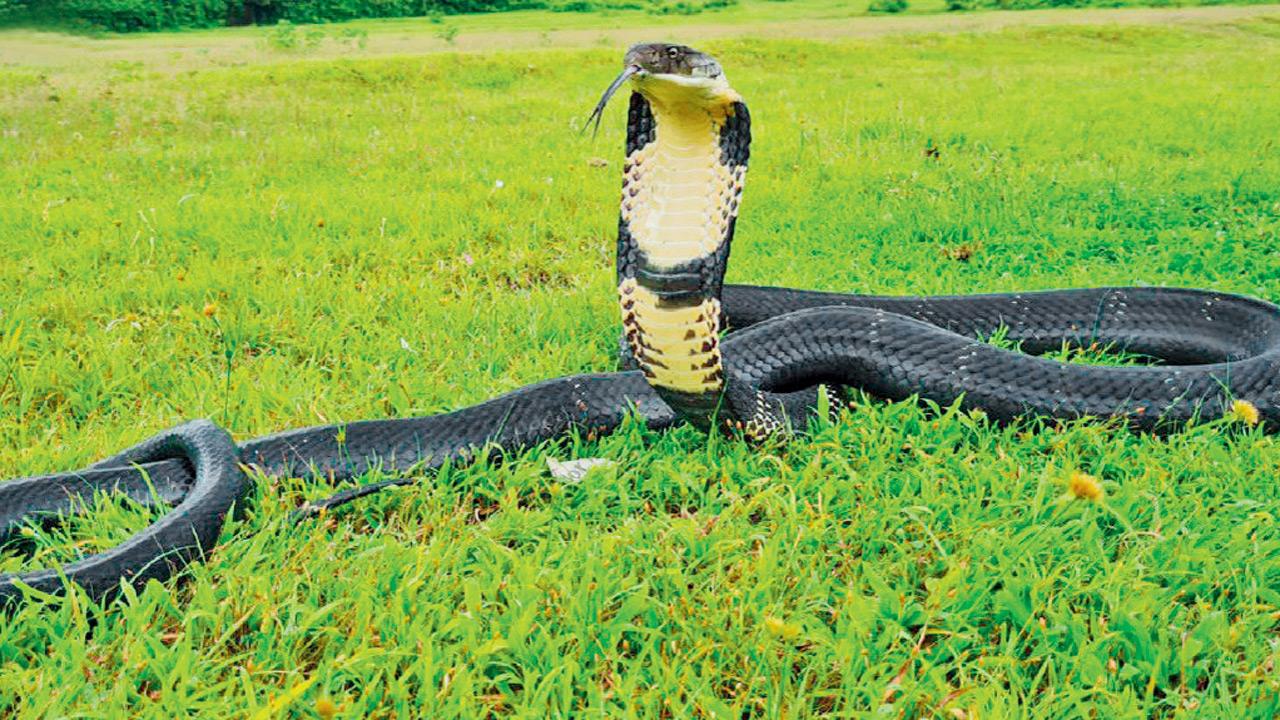
03 February,2026 09:17 AM IST | Mumbai | Devashish KambleOn January 31, animal welfare organisation, Upadhyaya Foundation organised the India Animal Welfare Forum (IAWF) at a venue in Bandra-Kurla Complex, gathering conservation experts, policymakers, and researchers, among others to deliberate on critical issues facing India’s wildlife. On the sidelines of the sessions, we reached to Dr Sanjay Molur, executive director, Zoo Outreach Organisation, for insights on the subject of his conversation: Snake conservation. Wildlife biologist, Gowri Shankar (also a speaker at IAWF) handles a King Cobra Excerpts from the interview. What is most misunderstood about snakes? How does that make conservation harder?It’s lack of knowledge and the common fear surrounding snakes in Indian society. Myths about snakes supposedly always being out to get you lead to very limited information, especially about the potential of certain snakes being venomous. Many aren’t venomous at all. This fear causes a slew of problems in snake encounters, as people simply don’t know how to respond in the moment. An injured Indian Rock Python, rescued by members of wildlife rescue organisation, SARRP India (part of IAWF). Pics courtesy/Sarrp India; Gowri Shankar What are some ways to reduce human-snake conflict, especially in Mumbai, which is home to the Sanjay Gandhi National Park?Respond logically, not emotionally. Don’t create a ruckus, grab the snake or prod it with an object; this only increases chances of being bitten. Remember, snakes living in our vicinity have probably seen us multiple times before we see them once. They have no inherent conflict with us, which is why I discourage using the term ‘conflict’ at all; interactions, positive or negative, are usually what occur between humans and snakes. If a snake is outside the house, observe where it’s going; it has no business with humans, and will automatically find a way out. If it’s inside, ideally, create a distance or barrier between yourself and the reptile, and call a snake rescuer. Dr Sanjay Molur Could you share interesting facts that have emerged from recent research about snakes to help us understand them better?Currently, ongoing research has discovered four species of the King Cobra, rather than a single one. Importantly, researchers are studying how snakes respond when relocated, especially if taken into captivity (after a scare in someone’s house, for example). After being released into new habitats, they starve and eventually die under the duress of being placed in an unfamiliar area, with nothing to anchor them. More research is required to see if multiple species respond similarly. These findings serve only to help reduce snake bites, which kill approximately 60,000 annually in India. What should be done differently for snake conservation in an urban centre like Mumbai?I’d advise Mumbaikars [especially those living amidst greenery] to learn to co-exist with snakes. Small steps like wearing footwear outside the house, carrying a torch in the dark, and not inserting your hands into random bushes to search for objects, are all acts that mitigate chances of snakes harming you in self-defence, and ultimately, contribute towards protecting them. Snakes have evolved to adapt to varied habitats, from forests to mangroves. Human settlements push them away, but they easily return. Removing a snake from your garden makes no difference; another one will replace it if there’s sufficient area to survive. Hence, learn more about them to avoid harming them or being harmed. Log on to: zooreach.org
02 February,2026 09:11 AM IST | Mumbai | Trisha GhoshHave you heard of HYROX, Crossfit, or the perennially trending pilates? What about the mudgar, the gada or the samtola? While pop culture will often show you these ancient warrior training tools in the hands of exaggeratedly buff wrestlers swinging them around akhadas, they are far less intimidating in real life. Aakash Shah, a certified strength and conditioning coach, is reintroducing the traditions to time-strapped Mumbaikars in a way that feels familiar. Aakash Shah swings a mace A graduate from the National Strength and Conditioning Academy in the USA, Shah fell in love with the OG workout routines in 2023 through Bengaluru-based Indian clubs and mace community, Tagda Raho. “What surprised me the most was that the workouts were not only for shoulder mobility. You can build raw power, improve core and hip strength, and move easier in your daily life,” he recalls. Shah practises with the samtola Shah has trained children as young as 14, and assures us the forms and routines can be tweaked to fit age and fitness levels. “Lightweight mudgars and basic swings can be the perfect gateway for those new to strength training. Newer mudgars are modular, meaning you can dismantle and rebuild them in different weights,” he adds. We learn that the tools are especially helpful for those who regularly play tennis, golf, or cricket, where grip strength plays a vital role, and for martial arts athletes who rely on strength and conditioning. Log on to @the_athleteway Prachiti Nagpurkar trains with the mudgar; a variety of exercises makes it easy for new learners to take up the discipline The real deal To gauge how well the maces and clubs blend in with your regular workout routine, mid-day invited two MMA fighters who tested out a session with Shah in Girgaum Form factor A plunge with the gada (mace) helps build lower body strength and stability for athletes and sportspersons As someone who has been an MMA athlete for 19 years, I found many overlaps between my discipline and the traditional practices. I walked in with a knee ligament tear and was concerned if I was fit enough to train with the mudgar. Thankfully, the flexible nature of the workouts ensured there was not much load placed on my lower body. As a first-timer, there was a short learning curve before I got comfortable handling the maces and clubs. I would recommend two days a week of mudgar training between your traditional gym training for the perfect balance. — Nikhil Kunder, president, MMA Sports Federation of India Range and recovery The first thing that struck me about the mudgar and samtola is the wider range of motion compared to gym weights. I believe the free-flowing nature of movements will do wonders for athletes who are in recovery, but still want to keep in touch with their strength training. I could feel all my muscles engage in the simplest of mudgar movements; something you won’t see with dumbbells or barbells. One tip I would share is to always train under a certified trainer. — Shirish Dethe, MMA athlete (From left to right) The gada, mudgar, and samtola Take your pick >> Mudgar: Basic swings and light parikramas (rotations) for those testing the waters>> Samtola: More challenging rotations that build coordination and core strength>> Gada: Great for pulling motions, focussing on back, deltoids, and shoulders Mudgar vs Kettlebell Experts weigh in on how the familiar kettlebell (below) from modern gyms performs against the mudgar Mudgar >> Wider range of motion>> Better for building coordination and overall strength >> Longer and safer grip Kettlebell>> It has a shorter, more focused range of motion >> Better for targeting specific muscles >> Smaller and familiar grip Information courtesy: Aakash Shah, Nikhil Kunder, and Shirish Dethe
02 February,2026 09:04 AM IST | Mumbai | Devashish KambleADVERTISEMENT